Pleasanton sits at the doorstep of the Livermore Valley, one of California's oldest wine regions, and it shows in the kitchens here — a serious built-in Sub-Zero wine column or under-counter wine drawer is almost standard in the newer Ruby Hill and Bridle Creek homes. A wine unit, though, is not just a cold box. It is a precision climate cabinet, and when it slips even a few degrees it quietly puts a real collection at risk.
The calls we get are rarely a unit that has died outright. Far more often it is a wine column that has drifted warm — the upper zone reads 58°F when it is set to 52°F, or the two zones have stopped behaving like two zones at all. That slow drift is the signature wine-storage fault, and it has a short list of causes.
Dual-zone control, and why one half goes warm
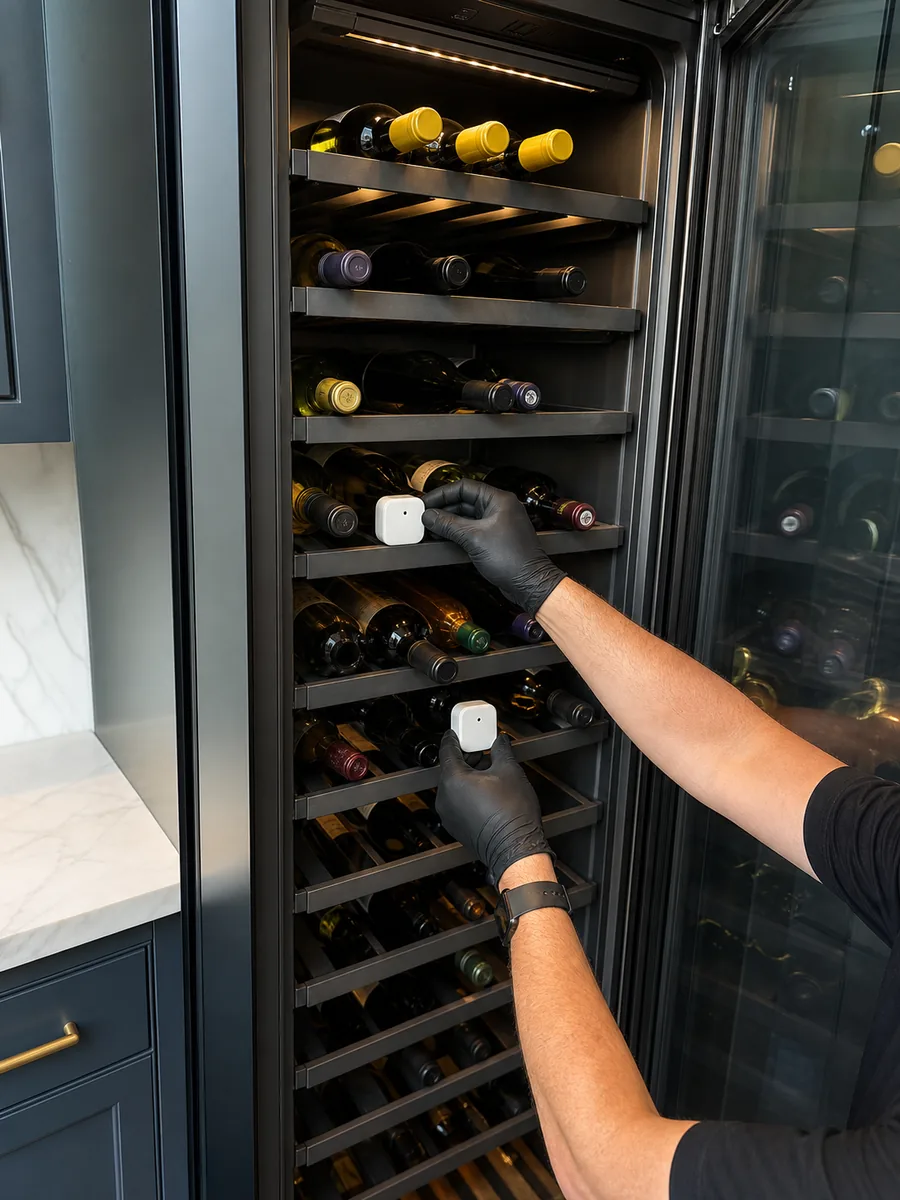
Most Sub-Zero wine units split into two independently set zones — reds up top, whites and sparkling below — each governed by its own sensor and its own damper feeding cold air from a single sealed system. When one zone drifts and the other holds, the sealed system is almost always fine; the problem is in how that zone is being measured or fed. A failing thermistor in the warm zone reads the cabinet colder than it really is, so the control stops calling for cooling and the wine warms. A stuck or obstructed damper does the same thing mechanically, starving that zone of airflow.
This is the most common wine-cooler repair we make in Pleasanton, and it is also one of the most satisfying — a drifted zone usually traces to a sensor or a damper, both bounded parts, not to the compressor most owners fear is dying.
Airflow, the condenser, and the Tri-Valley summer
A wine unit rejects its heat through a condenser behind the grille, exactly like a Sub-Zero refrigerator, and exactly like a refrigerator it suffers in a hot, dusty Pleasanton summer. When triple-digit afternoons load the kitchen with heat and the fine inland dust cakes the coil, the whole cabinet creeps warm and the compressor runs long to keep up. Many Pleasanton wine units also live in butler's pantries, bar nooks, or converted spaces with less airflow than a kitchen, which makes a clean condenser and an unobstructed grille matter even more.
The other heat path is the door. A wine cabinet's UV-tinted glass door carries a perimeter gasket and an insulated seal, and a tired gasket lets warm room air leak in around the glass — a small leak the unit fights with constant runtime. On a hot Ruby Hill afternoon that leak is the difference between a column that holds 52°F and one that never gets there.
Vibration, sediment, and the repair-or-replace call
There is one fault unique to wine storage: vibration. A worn evaporator or condenser fan, or compressor mounts that have aged, transmit a low hum into the cabinet that gently agitates bottles and disturbs the sediment in older reds — the very wines a collector is laying down. If your column has developed a new buzz, it is worth addressing before it costs you a vintage, not just for the noise.
As for whether a unit is worth fixing: a sensor, a damper, a fan, or a gasket on an otherwise sound Sub-Zero wine column is an easy yes — these cabinets are built to run for many years and replacing one runs into real money. The harder call is a sealed-system leak on an older unit, and there we put gauges on it and show you the pressures before recommending anything. Every visit starts with a real diagnosis for a $89 fee that goes toward the repair, and we are an independent service — not factory-authorized — so the recommendation is ours, grounded in what your cabinet is actually doing.