Pleasanton sits inland at the head of the Amador and Livermore valleys, and the weather here is nothing like the foggy coast a half-hour west. From June into September the Tri-Valley bakes — afternoons in the high 90s and regular runs past 100°F, with dry, dusty air rolling down off the surrounding hills.
That heat is the single biggest stress a built-in Sub-Zero faces in this town. A refrigerator that cruised through spring can start struggling the first week the thermometer pins triple digits, and almost every July emergency call we make in Pleasanton traces back to the same handful of summer problems.
Why the heat shows up at the condenser
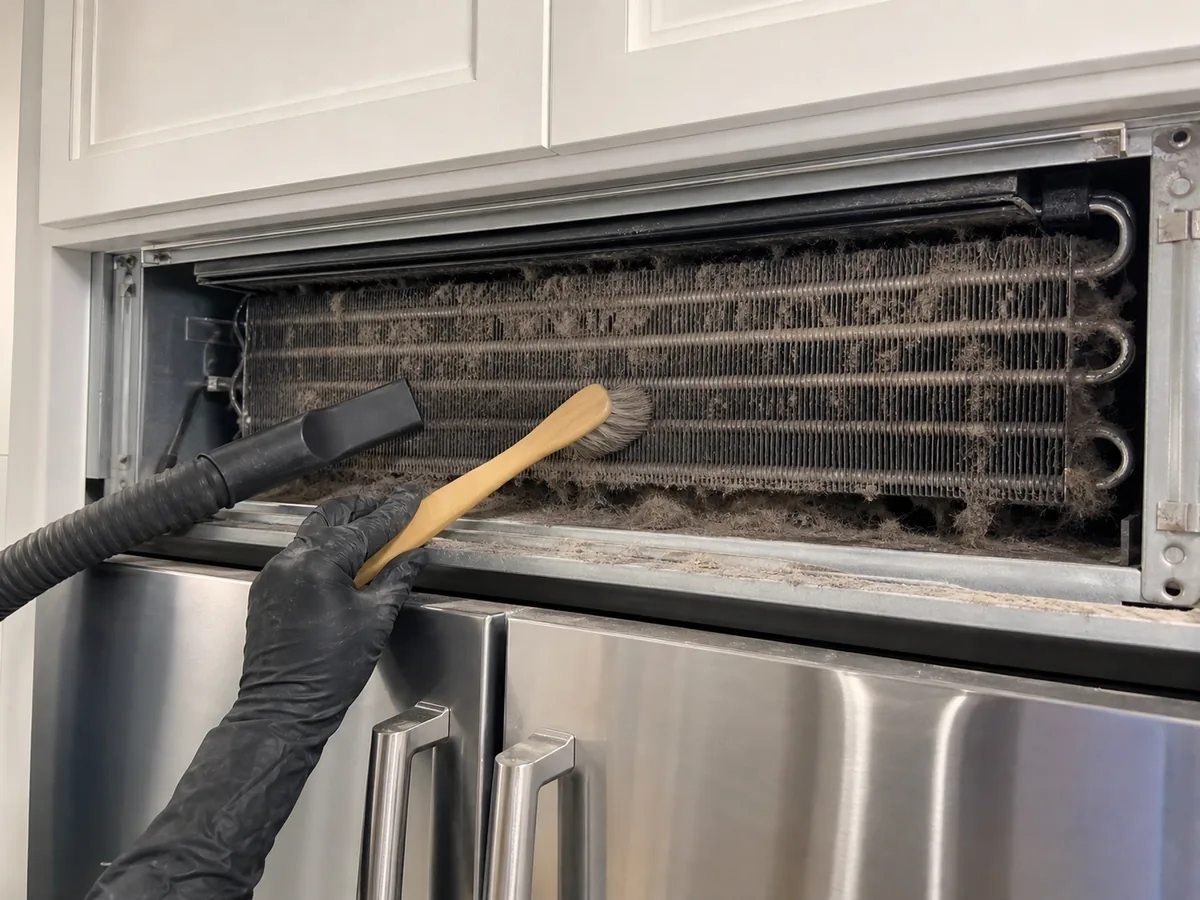
A built-in Sub-Zero rejects its heat into the room through a condenser coil behind the upper grille. When the kitchen itself is warm — and a Pleasanton kitchen in August is warm even with the AC on — the unit has to work harder to dump that heat. If the coil is also caked with the fine, dry dust the Tri-Valley summer kicks up, the compressor runs hot and long, and the freezer slowly loses its edge.
The tell is usually ice cream that won't stay firm and a unit that seems to run nonstop in the late afternoon. Nine times out of ten that is a loaded condenser, not a dying compressor — but ignore it through a full summer and the constant high-temperature running is exactly what shortens a compressor's life.
The pre-summer checklist
Two things matter most before the heat sets in. First, the condenser coil gets vacuumed and brushed clean so it can actually shed heat. In dusty neighborhoods near open space — Kottinger Ranch, the homes backing the ridgelines above town — we often find coils that need this twice a year rather than once.
Second, the door gaskets get checked. A gasket that seals fine in mild weather can let warm, dry air leak past on a 102°F day, and the unit fights that leak with extra runtime. A clean coil and a tight gasket are cheap; the sealed-system repair a neglected, overheated unit eventually needs is not.
Garage and wine-room units take it worst
Plenty of Pleasanton homes run a second Sub-Zero or a wine-storage unit in a garage or a converted space that isn't fully conditioned. In a Ruby Hill or Vintage Hills garage that hits 110°F by mid-afternoon, that unit is being asked to do something it was never really designed for. If you keep a backup fridge or a wine cabinet in the garage, it deserves an extra coil cleaning and a temperature check going into summer — it is working far harder than the one in your kitchen.