In Pleasanton the kitchen often sells the house, and in a lot of these kitchens the centerpiece is a built-in Sub-Zero that came with the home. Unlike a freestanding refrigerator, an integrated column or a side-by-side built-in is a fixture — it conveys with the property and is quietly folded into the price. That cuts both ways for a buyer. A sound unit is several thousand dollars of value already installed; a tired one is a future repair-or-replace decision you are about to inherit, and on a built-in that decision is measured in thousands, not hundreds.
The trouble is that a refrigerator looks fine on a one-hour showing. It is cold, the lights work, the doors close. None of that tells you whether the sealed system has another decade in it or eighteen months. The good news is that your escrow inspection window is exactly the right time to find out, and you do not need to be a technician to gather what matters.
Where Pleasanton's original built-ins still live
Different parts of town carry different vintages, and that shapes what you are walking into. The Ruby Hill and Bridle Creek estates built through the late 1990s and 2000s tend to hold classic 600-series and early integrated columns — units engineered to run fifteen to twenty years, which means many are now at or past that mark with their first owner's appliance still in place. Vintage Hills and the older Birdland ranch homes go back further, and it is not unusual to find a 500- or 700-series that has simply never been replaced. The newer remodels around downtown and the Stoneridge corridor often have separate refrigerator and freezer columns, sometimes mixing a newer unit into older cabinetry.
The point for a buyer is that 'it came with the house' frequently means 'it is the same age as the kitchen.' A two-decade-old built-in is not automatically a problem — these are serious machines and a well-kept one can keep going — but its age belongs in your math, not as a pleasant surprise after closing.
What to gather during your inspection window
Your general home inspector will confirm the unit powers up and cools, but they are not appliance specialists, so it is worth knowing what to look and listen for yourself while you have access. Put a thermometer in the fresh-food side for a few minutes — it should settle near 37°F — and another in the freezer, which should reach close to 0°F. A compartment that cannot get there, or a freezer that is soft while the fridge is fine, points to a sealed-system or defrost issue rather than a quick fix.
Then use your senses. Pull the lower grille and look at the condenser: a coil packed with the fine dust that drifts off the Pleasanton hills tells you maintenance has been skipped, which ages a unit fast. Listen for a loud grind, a buzz that ends in a click, or a fan clatter — sounds that travel with real wear. Open the doors and feel the gaskets for a flush, springy seal, and look for water in the bottom drawers or staining on the floor under the cabinet, which can mean a slow leak has been running unseen. None of this is invasive, and all of it can be noted while the inspection contingency is still open.
Reading the age without a service call
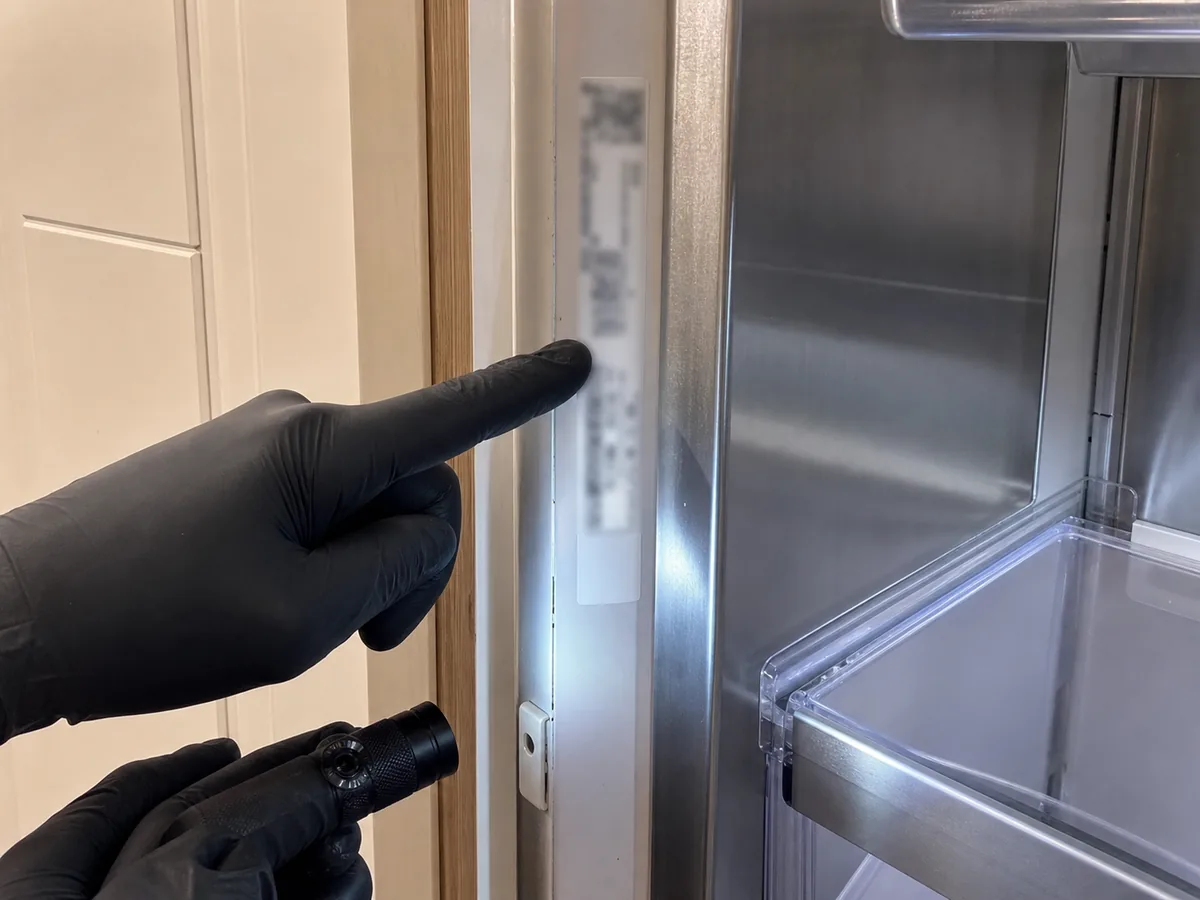
You can date a Sub-Zero yourself from the model and serial plate, usually found on the inner wall behind a door or under the upper grille. The model number tells you the series and generation; the serial number encodes when it was built. Photograph both during your walkthrough — the same tag a technician would ask for — and you can place the unit's era before you ever spend a dollar.
Why it matters: a bounded repair on an otherwise sound unit (a gasket, a fan, a control board, an ice-maker module) is almost always worth doing on a built-in, because replacement runs into real money and weeks of lead time. The expensive category is the sealed system — a refrigerant leak or a failing compressor — and that is where age tips the scale. Knowing the build date turns 'it's old' into a specific question you can actually price.
What to negotiate, and when a pre-close check pays for itself
If your readings and the unit's age raise a flag, you have leverage while the contingency is open that you will never have again after closing. A targeted diagnostic during escrow — model and serial confirmed, temperatures and airflow read, sealed-system pressures checked if anything looks marginal — turns a vague worry into a number you can take back to the negotiation. Sometimes that supports a repair credit; sometimes it confirms the unit is sound and you can stop worrying about it. Either outcome is worth far more than the diagnostic fee.
For sellers the same logic runs in reverse: a pre-listing service that documents a clean, recently-maintained built-in removes an easy bargaining chip from buyers and protects the kitchen's value. On a unit old enough that a major repair is genuinely in question, our repair-versus-replace page lays out the economics, and the model-number guide helps you place the build date from the tag photo. Whichever side of the deal you are on in Pleasanton, the cold box in the corner is part of the price — it is worth knowing what you are actually buying.